Florida's python-fighting robo-rabbits have struck out so farKimberly Miller, USA TODAY NETWORK - FloridaTue, November 17, 2026 at 10:02 AM UTC
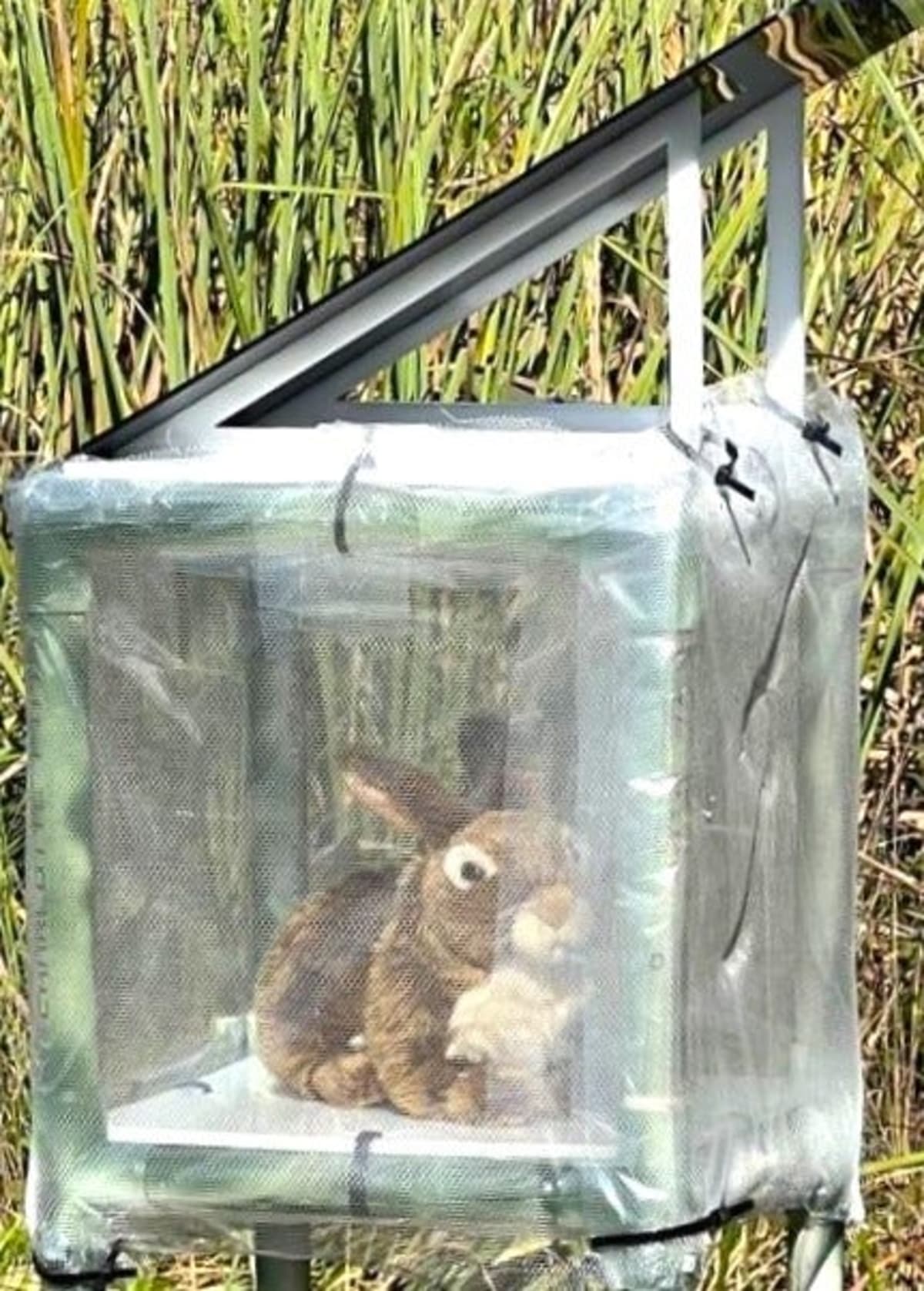
Robo-rabbits deployed in the Everglades as bait for invasive Burmese pythons have been and modified with enhanced scent, motion and body temperature features.
A progress report from University of Florida researchers working on the “lures” project said that as of this past summer there is a legion of 79 functional bionic bunnies with design changes that make them more durable and more detectable by the scourge of the Everglades.
The stuffed toy rabbits, whose insides were replaced with solar-powered mechanics and tiny heaters that work together to mimic the movements and body temperature of marsh rabbits, were first tested during the summer of 2025.
South Florida Water Management District officials are helping fund the experiment with a total earmark of $327,535, which includes other experiments that date back to 2022.
Additions to the bunny bait design, which involves the robo-rabbit in a clear pen about 15 inches off the ground, include a fan to better distribute mammal scent near the rabbit, and a second scent source about 10 feet away to increase the range of python temptation.
Also, cameras trained to take and upload photos of pythons when they slither near the cages received software that will allow for rapid detection.
The idea is that a state contracted python hunter can be alerted to the presence of the python and nab it before it realizes its intended meal is fake fur and metal.
"Our partners have allowed us to trial these things that may sound a little crazy," said UF wildlife ecology and conservation Professor Robert McCleery in a 2025 interview. "Working in the Everglades for 10 years, you get tired of documenting the problem. You want to address it."
McCleery, who oversees the lures project, declined to comment with an update on the robo-rabbits, saying in a statement that data was being reviewed and he was not ready to release it yet.
No Florida python captures yet by robot bunnies
The progress report was obtained through a public records request with the water management district, which said that to its knowledge the robotic rabbit program had not produced any python captures yet.
“But it is our understanding the pilot program is still being refined,” the district said in a statement. “The District’s Python Elimination Agents are not yet using the robotic rabbits as part of their program so none of the district’s agents would be able to speak about the robotic rabbits.”
State efforts to mitigate python proliferation have included a myriad of efforts with varying degrees of success.
Renowned snake hunters from the Irula tribe in India were brought in to hunt and share their skills. There have been tests using near-infrared cameras for python detection, special traps designed, and pythons are tracked by the DNA they shed in water, with radio telemetry, and with dogs. Also, the annual Florida Python Challenge has gained legendary status, attracting hundreds of hunters each year vying for the $10,000 grand prize.
Possibly the highest profile python elimination program is the 100 bounty hunters who work for the South Florida Water Management District and the Florida Fish and Wildlife Conservation Commission.
Previous bionic bunny tests included just scent lures for pythons
In previous work submitted to the district, the robot bunny project found that pythons were attracted to live rabbits in pens where the snakes would remain for an average of 80 minutes.
But having multiple live rabbits in multiple pens spread across a formidable landscape is cumbersome and requires too much manpower to care for them.
“You have to check the traps at minimum once every 24 hours,” said Joe Wasilewski, a conservation biologist and wildlife consultant who has worked with UF’s Croc Docs but is not involved with the robot-rabbits. “It is excessive maintenance.”
So, researchers tried using a mound of dirt mixed with rabbit waste to attract pythons and compared it with control dirt that had no rabbit scent. There was no difference between the plain dirt and rabbit-perfumed dirt.
“Then we got to thinking that we needed to capture all of the processes than an actual rabbit would give off,” McCleery said in 2025.
Other python researchers have been dubious about whether the robot rabbits will be successful.
Wasilewski said he’s seen no data to have an opinion either pro or con on the project but he believes the most productive removal efforts so far have been the contracted hunters and the use of Judas or "scout" snakes.
This year the Conservancy of Southwest Florida announced it had removed 177 invasive pythons weighing a combined 8,080 pounds largely by using scout snakes. Scout snakes are male Burmese pythons that have been tagged with radio telemetry and can be tracked to breeding females.
Wasilewski thinks pythons may be smart enough to tell the difference between a mechanical bunny and a real one but that experimentation is what science is all about.
“They are trying to think outside the box, and this is way outside the box,” Wasilewski said. “This invasive species stuff is such a new aspect of science. Twenty to 30 years ago, the concern was only about endangered species and making management plans for them.”
Kimberly Miller is a journalist for the USA TODAY NETWORK FLORIDA. She covers weather, the environment and critters as the Embracing Florida reporter. If you have news tips, please send them to kmiller@pbpost.com. You can get all of Florida’s best content directly in your inbox each weekday by signing up for the free newsletter, Florida TODAY, at palmbeachpost.com/newsletters.
This article originally appeared on Palm Beach Post: Florida's python-fighting robo-rabbits have struck out so far
Source: Nature



0 Comments