There's never been another Dale Earnhardt, and there never will be

Just 10 seconds into NASCAR's2026 Super Bowl ad touting the sport's new slogan— "Hell Yeah" — there's a telling detail on a license plate: The "e" in "Hell" is a 3. And in case you missed that, there's a fan wearing a 3 jacket, and a Craftsman truck decked out in a familiar black paint scheme doing a dramatic slow-mo burnout. The message is unmistakable: No more screwing around. NASCAR's bringing back that Dale Earnhardt attitude.

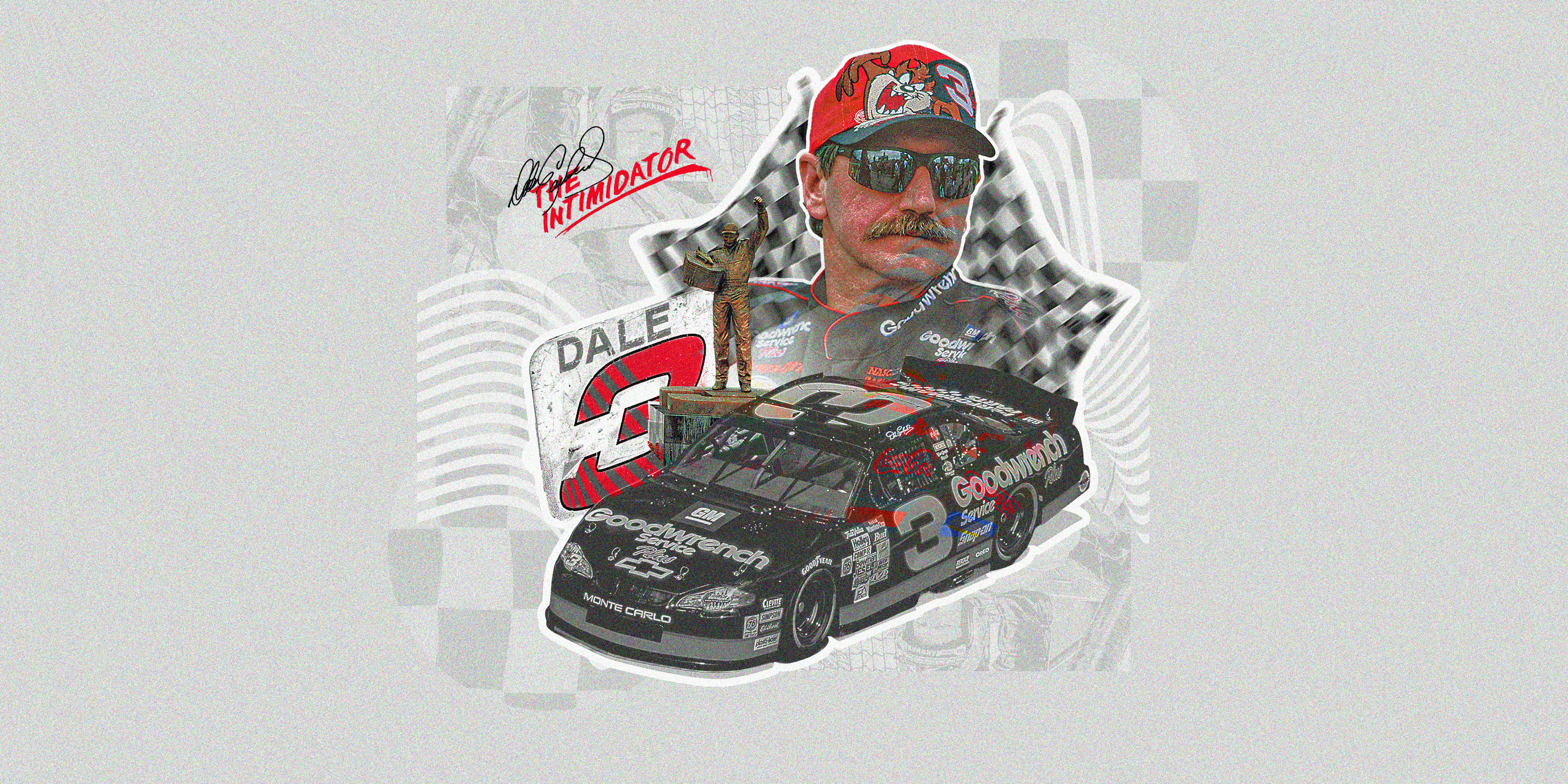
Yahoo Sports (Amy Monks/Yahoo Sports illustration)

Twenty-five years after his sudden, shocking death on the final lap of the 2001 Daytona 500, Dale Earnhardt remains as vital to NASCAR as ever. A quarter-century after we last saw his Goodwrench No. 3 knifing through the pack, Dale Earnhardt is still exactly what NASCAR wants to be.

Sure, the tattoos Earnhardt fans got during his lifetime are fading and sagging. The last Cup driver to run in a race with Earnhardt, Ryan Newman, retired more than two years ago. But you don't have to look far to see Earnhardt's persistent influence. He's the focus of new documentaries, books, endless social media recollections. His image — sunglasses, mustache, attitude, black No. 3 flag — is still everywhere at NASCAR tracks.

No other driver — not Jeff Gordon, not Chase Elliott, not even Earnhardt's boy — has ever come close to matching The Intimidator's impact. And given the way that NASCAR, and American culture, have trended in the years since his death, it's likely no one ever will.

If Dale Earnhardt hadn't existed, a team of marketers — or a superhero movie screenwriter — couldn't have created a more perfect avatar of NASCAR's ideal self-image. Born in the blue-collar mill town of Kannapolis, North Carolina, he lived hard and raced harder. Some people climb over obstacles; Earnhardt just drove right through them.

He was mean as hell; you don't get the name "The Intimidator" because you're a go-along, get-along kind of guy. But he also inspired deep respect up and down the garage. You might not like him, you definitely wouldn't outrun him, but you damn sure respected him. Drivers from Jeff Gordon to Jimmie Johnson to Kurt Busch have spent the last 25 years telling stories of how nervous they were in Earnhardt's presence, and these are NASCAR's champions.

Advertisement

But Earnhardt wasn't just a surly S.O.B. Besides being tougher than a three-dollar steak, Earnhardt was also funny as hell. His disgust at drivers who complained about going too fast at Talladega created one of racing's all-time great quotes: "Put a kerosene rag around your ankles so the ants won't climb up and eat that candy ass." It's tough to say which was scarier — Earnhardt in your rear-view mirror charging at you, or Earnhardt in his sunglasses smiling at you.

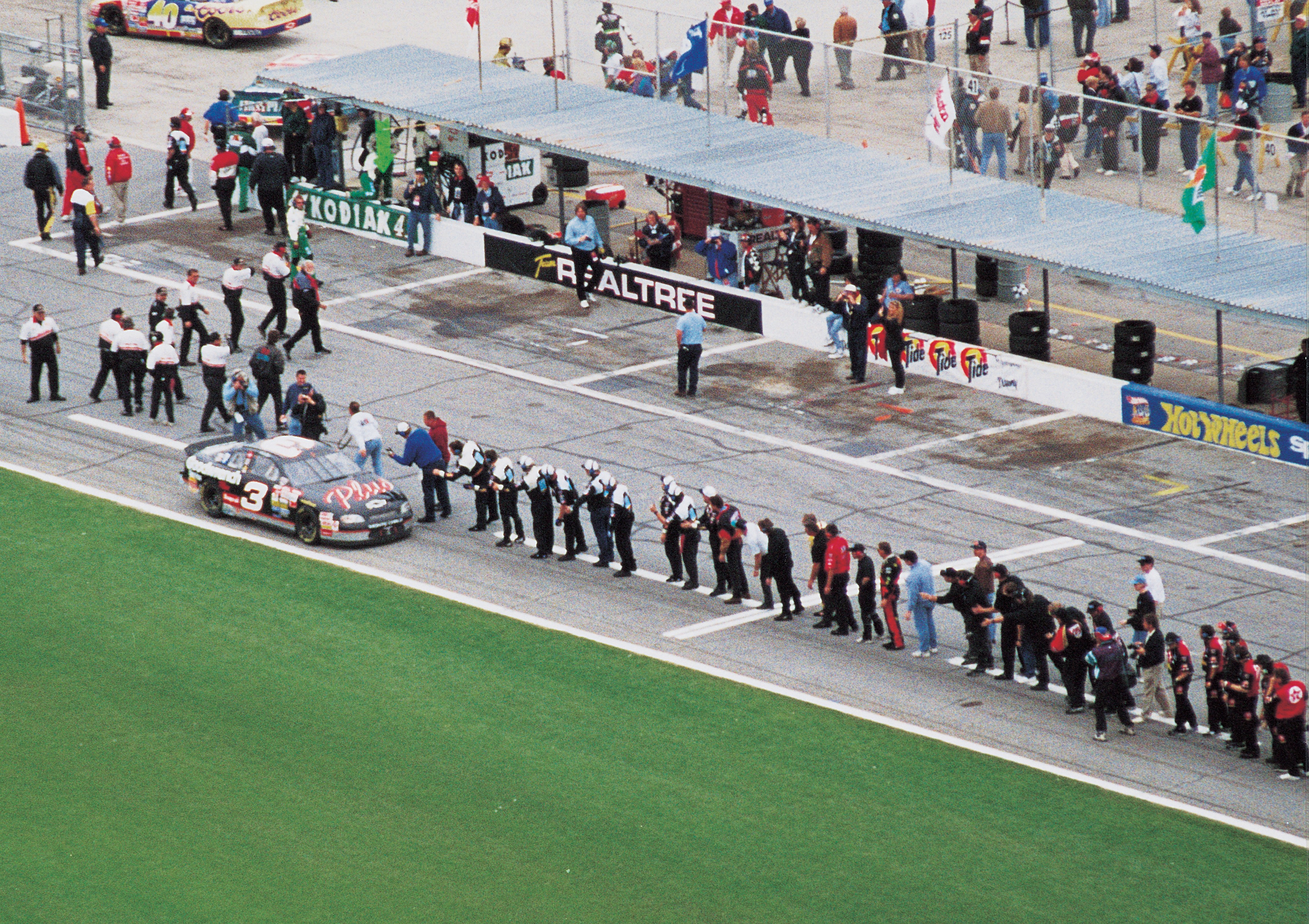
DAYTONA BEACH, FL - FEBRUARY 15:  Dale Earnhardt Sr. (April 29, 1951 - February 18, 2001) driver of the #3 GM Goodwrench Chevrolet celebrates with every crew member of every team on pit road after winning the 1998 NASCAR Winston Cup Daytona 500 at the Daytona International Speedway on February 15, 1998 in Daytona Beach, Florida.  (Photo by ISC Archives/CQ-Roll Call Group via Getty Images)

Sure, he wasn't perfect. He played by the rules right up until the rules didn't suit him. If he needed to turn someone to win a race, like Terry Labonte in Bristol, well, he'd rattle their cage and plead innocence later. He could be a tough man to love, whether you were his wife or his friend or his child. And he was beyond stubborn; it's tough to reconcile the fact that he refused to wear the neck-protecting HANS device that could have saved him from the exact spinal injury that killed him.

In the years since Earnhardt died, American culture has swung away from the worship of the car, and of Earnhardt's brand of tough, unapologetic masculinity. Maybe he would have changed with the times, or maybe he would have stubbornly remained set in his ways. Or maybe both. He was complex and unpredictable, and he swerved away from expectations just like he swerved around slower-moving cars.

Earnhardt swung conservative in his political beliefs, but famously once cut the Confederate flag off his truck's bumper sticker after he understood the offense it caused. He was as wealthy as a king, but he loved driving his tractor on his farm — sometimes even riding up to unsuspecting onlookers trying to catch a glimpse of his estate. He stoked a public rivalry with Gordon, but privately went into business with him, monetizing their personality clashes.

But he didn't whine. He didn't play victim. He just strapped himself into his Goodwrench No. 3 and figured out how to beat you, one way or another.

Even now, Earnhardt's influence persists far beyond the grandstands of NASCAR tracks. Anyone who's ever felt the hum of an engine in their bones, or mashed the gas on an open highway, discovers that bit of Earnhardt in their soul. Maybe that's why his absence still hurts, and always will.

Raise hell. Praise Dale. Now and forever.

There's never been another Dale Earnhardt, and there never will be

Just 10 seconds into NASCAR's2026 Super Bowl ad touting the sport's new slogan— "Hell Yeah" — there...
USMNT star Christian Pulisic returns to AC Milan training

AC Milan received a major boost on Wednesday, Feb. 11 as Christian Pulisic returned to full team training.

USA TODAY Sports

Pulisic has dealt with a number of minor injuries of late, most recently missing Milan's 3-0 win at Bologna on Tuesday, Feb. 3 due to bursitis.

But with his return to group training, the American star now appears on track to return for a match at Pisa on Friday, Feb. 13.

In addition to his recent bout with bursitis, Pulisic has also dealt with a hamstring injury for several months. The Pennsylvania native has started three of theRossoneri's last seven league matches.

Advertisement

Pulisic is Milan's leading scorer with 10 goals in all competitions, but he hasn't scored or assisted a goal yet in 2026.

The match at Pisa is massive for Milan's title hopes. Max Allegri's men enter the match in second place, trailing Inter by eight points with a game in hand.

With Pisa currently in the relegation zone, picking up full points will be a must for theRossoneri.

This article originally appeared on USA TODAY:Christian Pulisic injury news: USMNT star back in AC Milan training

USMNT star Christian Pulisic returns to AC Milan training

AC Milan received a major boost on Wednesday, Feb. 11 as Christian Pulisic returned to full team training. ...
The Lottery Wheel: A radical, complete and long-overdue fix for NBA tanking

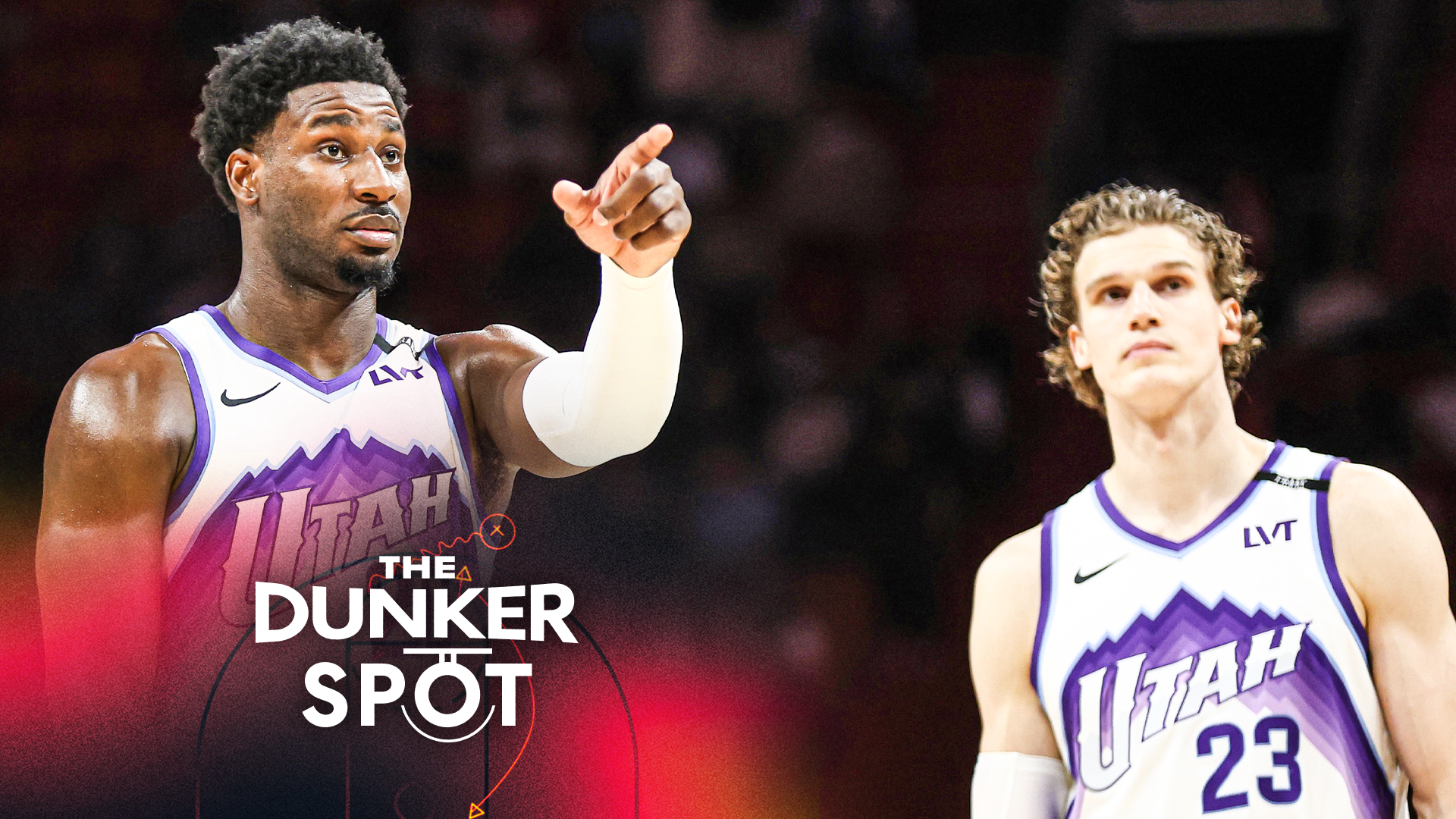
Tanking in the NBA is getting out of hand.Jaren Jackson Jr. made his debut with the Utah Jazzand had 22 points through three quarters. Then he sat down and watched a 15-point lead disappear. So did Lauri Markkanen. And so did Jusuf Nurkic. Utah lost. That was the point.

Yahoo Sports

Every year, tanking happens. But the scale of it this season is staggering, and it's undermining the product. The Jazz are not alone in their mission to intentionally lose. The Grizzlies traded away Jackson and aren't rushing back Zach Edey or Ja Morant. The Pacers rested six veterans in a loss against the Jazz last week. The Bucks are keeping Giannis Antetokounmpo away from the court for as long as possible. Trae Young and Anthony Davis haven't played yet for the Wizards. The Bulls flipped half the team for a nonsensical roster with eight guards on it. The Nets and Kings aren't trying to win. Neither are the Mavericks. Even the team thatjust hit the jackpotis back in the tank.

That's nine teams. We're not even at the All-Star break. This is happening despite a 2019 lottery reform that flattened the odds so the three worst teams share a 14% chance at the top pick. That was supposed to fix things. It hasn't. No team is tanking to the extremes of the Process Sixers. But more teams are tanking into the top 10, because odds in the middle of the lottery now have a real chance of jumping into the top four like the Mavericks did one year ago, leaping from 11th to first to take Cooper Flagg. Since the 2019 reform, 11 of the 28 top-four picks have gone to teams with seventh-or-worse odds. Under the new rules, the NBA has matched decades of lottery chaos in just seven years.
(Hassan Ahmad/Yahoo Sports Illustration)

That's one reason tanking has reached this scale. The other? An absolutely stacked 2026 draft class. There are at least three players worthy of the first pick: Kansas guard Darryn Peterson, BYU forward AJ Dybantsa, and Duke big Cam Boozer. Even beyond them, the rest of the top 10 is stacked. Executives believe this draft has a chance to be historic.

"What's happening is largely a byproduct of this draft class," said one general manager of a playoff team. "But that doesn't make it right. The league office needs to make an example out of someone. That's how you send a message."

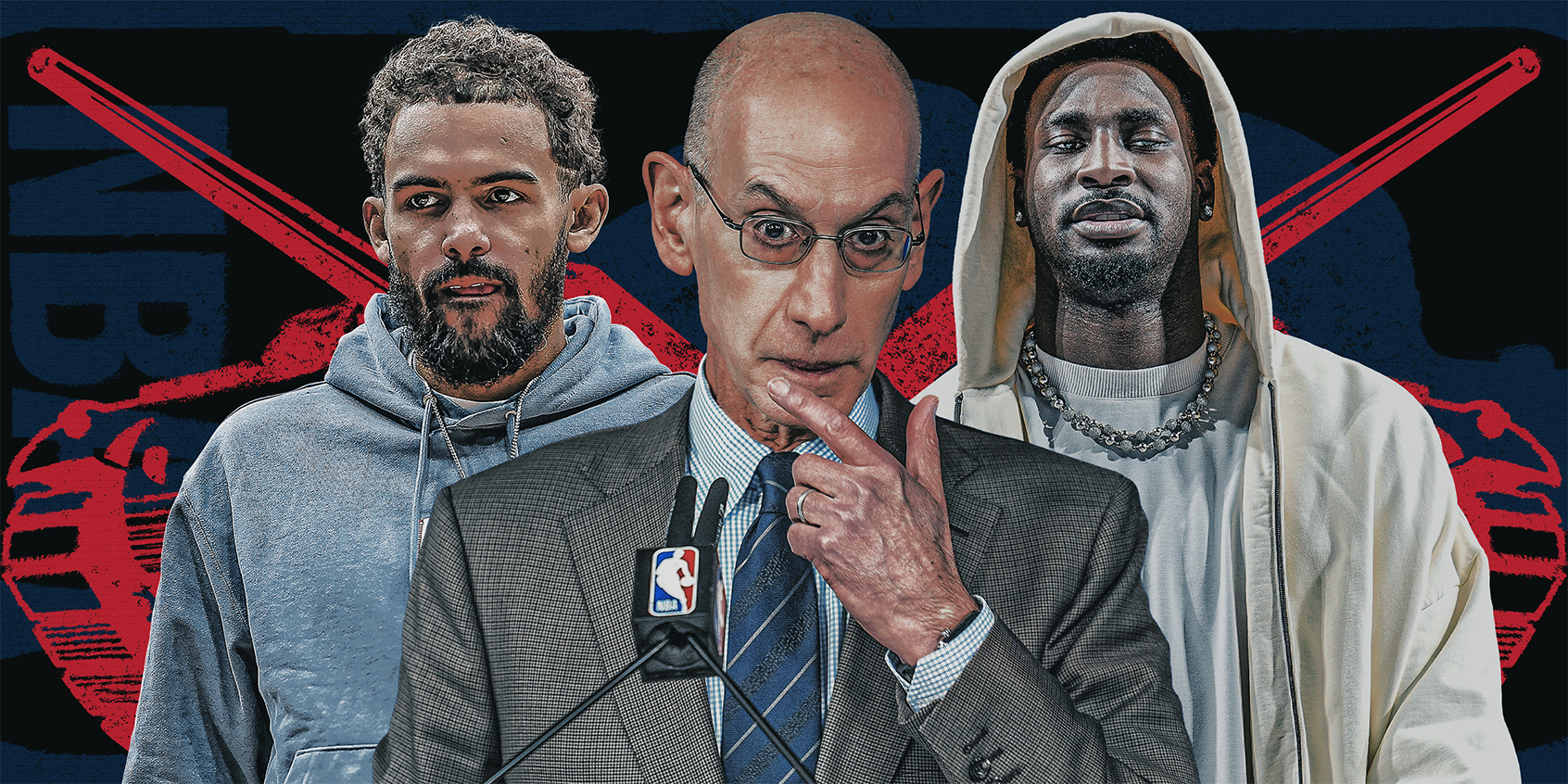
Adam Silver could punish a tanking team if he wanted with a massive fine or by stripping a pick. But tanking lives in gray areas. Is Utah resting stars in the fourth quarter more punishable than Washington keeping its new acquisitions in street clothes? The Jazz got fined $100,000 last year for resting Markkanen. In 2023, the Mavericks got hit for $750,000 for tanking out of the play-in and into the lottery. But teams treat those fines as a tax for better draft odds. The NBA's draft system directly rewards losing, and as long as that incentive exists, front offices will exploit it. Enforcement becomes whack-a-mole.

[Subscribe to Yahoo Sports NBA on YouTube]

Plenty of half-measures have been floated over the years — wins-based odds, multi-year standings formulas, tournaments for lottery teams — but every one of them still ties record to draft position, which means every one of them can be gamed.

Is tanking inevitable? What if you could design a system that completely severs the link between losing and draft position? Here's an idea: I call it the Lottery Wheel.

The basics of the Lottery Wheel

The premise is simple: remove a team's record from the draft equation entirely. Use predetermined lottery odds assigned years in advance to every team. Those odds rotate annually. This system retains randomness through a lottery draw, and those odds would remain tradable, which would create an entirely new market for teams to rebuild without needing to lose on purpose.

The Lottery Wheel works by dividing the NBA's 30 teams into five tiers of six teams each. Every tier is assigned a percentage of the total lottery odds, and those odds are distributed equally among the six teams within that tier.
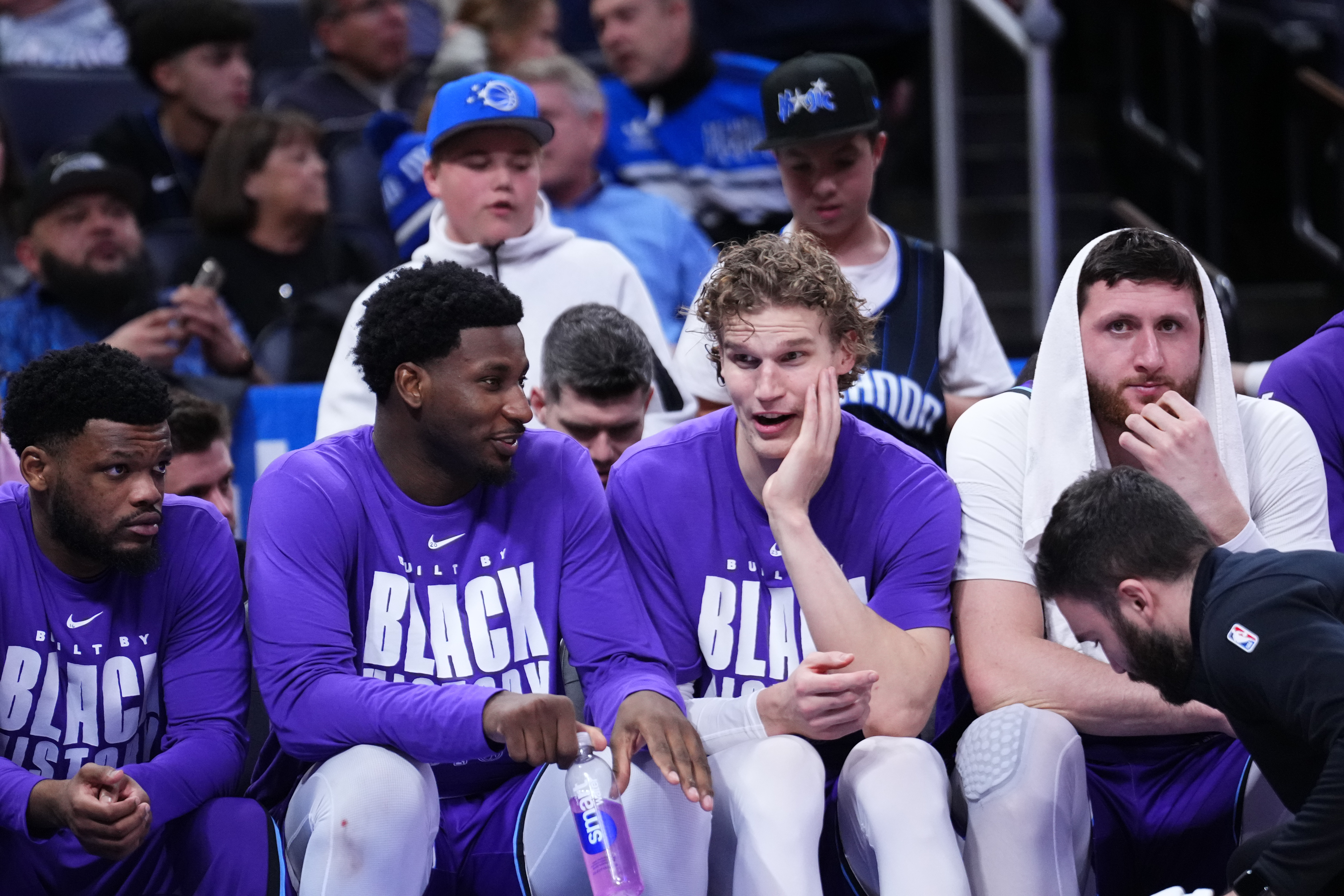
ORLANDO, FLORIDA - FEBRUARY 07: Jaren Jackson Jr. and Lauri Markkanen #23 of the Utah Jazz looks on against the Orlando Magic during the second half at Kia Center on February 07, 2026 in Orlando, Florida. NOTE TO USER: User expressly acknowledges and agrees that, by downloading and or using this photograph, User is consenting to the terms and conditions of the Getty Images License Agreement. (Photo by Rich Storry/Getty Images)

All 30 teams would be eligible for the lottery, not just the 14 teams that miss the playoffs. Why? Because if only non-playoff teams are eligible, you recreate a tanking incentive at the margins. Under any 14-team lottery in which all playoff teams are excluded, a team on the bubble has a genuine reason to lose its way out of the playoffs to retain lottery position.

Before the system launches, the NBA would seed every team into its starting position on the wheel based on cumulative record, with the worst teams selecting first. Once every team has its spot, the wheel locks in and rotates automatically.

The tiers would rotate on a five-year cycle, meaning every team passes through every tier exactly once over five years. The rotation is staggered — Tier 1, then Tier 3, then Tier 5, then Tier 2, then Tier 4 — so that no team ever has back-to-back premium years. Everyone knows where they'll be. Records are irrelevant. Odds are determined solely by which tier the wheel assigned to you that year. There is literally zero incentive to lose.

The Lottery Wheel's odds

The NBA's current lottery implementation talks about odds in the context of 1,000 combinations assigned to teams. For simplicity, the Lottery Wheel could use 600 combinations to evenly distribute odds within each tier:

Tier 1:40 combinations per team (240 total)

Tier 2:25 combinations per team (150 total)

Tier 3:18 combinations per team (108 total)

Tier 4:11 combinations per team (66 total)

Tier 5:6 combinations per team (36 total)

A Tier 1 team has roughly a 6.7% chance at the No. 1 pick. That's the best seat at the table, but it's less than half of the 14% the current system gives the worst team. Even Tier 5 teams carry a 1% chance, which is comparable to what the 13th-worst team gets under today's rules. No tier is a dead year.

Every team would receive 40, 25, 18, 11, and six combinations over the five-year cycle. That's exactly 100 per team. The system is perfectly equitable by design. No franchise is advantaged or disadvantaged over time. The only variable is which years your premium odds fall.

How the order is determined

The top six picks are determined by a weighted lottery draw. All 30 teams are in the pool, and their odds are based on their tier assignment, plus whatever odds were acquired via trade. Each pick is drawn individually.

Here's how those odds look:

Picks seven through 30 are slotted by tier. After the lottery draws the top six, the remaining teams fill in by tier order: all remaining Tier 1 teams go first, then Tier 2, then Tier 3, and so on. Those picks could be determined by randomizing their placement with a mini-lottery, similar to a reform ideapresented by Boston Celtics executive Mike Zarren, which helped inspire my firstWheel concept published over a decade ago.

The second round would follow the same tier-based structure for every pick in the round, with placement randomized within each tier.

You might be thinking: A 6.7% chance seems kinda low for Tier 1 teams. True. But because of how slotting works, a Tier 1 team's floor is the 7-12 range. That's a lottery pick in today's system.

Owners of bad teams will ask: "Why would I vote for a system that stops rewarding me for being terrible?" But the Lottery Wheel shifts the rebuilding engine from losing games to winning trades.

The trade market would change

Under the current system, teams trade future draft picks. With the Lottery Wheel, odds would also be tradable. And that changes everything. Draft capital would also have a known, quantifiable value attached to it. It turns draft capital into a liquid currency. That's a fundamentally different rebuilding engine for teams trading away or acquiring odds.

Advertisement

Here's an example: It's the 2036 trade deadline. Toronto is at the top of the standings and in its Tier 2 year for the draft. That means Toronto has 25 combinations, a 4.2% shot at the first pick and a 25.2% chance at a top-six pick. In today's NBA, a contender's first is usually a pick in the 20s and rarely the centerpiece of a rebuild trade. But under the Lottery Wheel, suddenly a contender's pick has value. And New Orleans, a non-contender in its Tier 5 year, has a player that Toronto desires. So the Pelicans acquire that pick from the Raptors to increase their odds, and the Raptors get a player to compete for a title.

That's an approach that doesn't exist in the current system, and it's the kind of transaction that would replace tanking as the primary engine of rebuilding.

The honest problems

I'm not going to pretend this system is flawless. It isn't. Let me address the biggest concerns head-on.

1. Chronically bad teams lose their safety net

This is the most legitimate objection. Under the current system, if you're terrible for seven straight years, you get seven straight years of great odds. There at least appears to be a path out for terrible teams. Whereas, with the Lottery Wheel, you get one Tier 1 year, and in my proposal those odds are only 6.7%.

"You're asking bad teams to give up the one thing that makes being bad tolerable," said an executive who heard my proposal.

Fair point. But the current system doesn't necessarily help chronically bad teams either. Only one team with under 20 wins (Minnesota in 2020) has actually secured the top overall pick since the rules were changed in 2019. The most common outcome for the teams with the best odds? The fifth pick. This has happened seven times for the 21 teams that have had 14% odds. In other words, the NBA has already effectively removed the safety net. And unlike today, a bad team doesn't have to stay bad to improve its position. It can acquire better odds through trades at any point in the cycle, or simply get lucky in any given year. Even Tier 5 teams have a shot at the top six.

2. A contender could win the first pick

Yup. It's possible. But that's already possible under the current system, with the Thunder holding the rights to an unprotected first courtesy of the Clippers. In 2017, we saw the Celtics land the first pick with a pick they acquired from the Nets.

The lottery is inherently unpredictable. And so is the draft. Great players can be found anywhere. The Lottery Wheel makes it more of a regular thing for good teams to get high picks, but the question is whether it's better for randomness to exist within a system that incentivizes winning or one that incentivizes losing. If the price of eliminating tanking is that sometimes a great team lucks into a great player, that's a price worth paying.

The modern day draft is no longer "compensation for being bad." It's simply how new talent enters the league. But losing is still rewarded because of the probability of moving up. That needs to change. And if a contender landing in Tier 1 feels like too much of an advantage — between the lottery odds and the guaranteed slotting floor of picks seven through 12 — the league could simply expand the weighted draw beyond six picks to soften that edge.

3. The known draft class problem

Everyone in the basketball world has a rough sense of which draft classes are loaded three to four years out. It's not an exact science, of course. But a team whose Tier 1 year falls in a weak class gets unlucky through no fault of its own.

This was one of the classic criticisms of the Zarren "wheel" idea: if teams know in advance when they'll be positioned well, elite prospects can time their draft entry to land in preferred situations. With modern NIL and two-year college stays on the horizon, that dynamic becomes even more plausible.

4. Expansion breaks the math

The NBA is almost certainly expanding to 32 teams at some point in the 2030s. Thirty divides cleanly into five tiers of six, but 32 doesn't. The league would need to adjust to either four tiers of eight, or vice versa, or have tiers with uneven group sizes.

5. Some teams are still going to stink

Even if draft incentive disappears, teams will still protect assets with load management and minutes limits, and still prioritize development over short-term wins, and still make financially motivated choices by ducking the tax and dumping salaries. So yes, the Lottery Wheel removes draft-driven tanking, but it does not magically create 30 teams playing like it's Game 7 every night.

Every one of those problems is an edge case, an optics concern, or something patchable with rules tweaks. But the numbers and percentages are adjustable. The structure is the point. The core mechanic is simple: your record has nothing to do with your draft position.

Realistically, a system like this couldn't take effect until the 2030s. Teams have already traded picks over the next seven years under the existing rules. This is around the time when expansion is expected. Restructuring the draft alongside expansion would give the league a natural window to start from scratch with enormous benefits.

The benefits of the Lottery Wheel

With all 30 teams in the pool, you'd see teams on the playoff bubble like the Bucks, Bulls, Grizzlies, and Mavericks all still competing for a spot this year if their odds weren't tied to being in the lottery.

More games would have meaning, making the regular season matter more. You would not see teams throwing out idiotic lineups or coaches installing bad game plans meant to increase their chances of losing. Instead, the focus shifts to winning games and developing players.

The Lottery Wheel also changes the conversation around resting players. The league's player participation policy would still exist since stars should play in marquee games. But the league would no longer have to guess whether a team is resting a player or tanking. That suspicion disappears. This is important not just for optics but for the genuine integrity of the league. The NBA has fully embraced sports betting and is making money off fans betting on games. Games that some teams are intentionally losing. The league can't partner with sportsbooks and profit off fan engagement while allowing teams to deliberately lose.

The on-court product improves, and so does the off-court spectacle. This is a bigger, better TV product than the current four-pick drawing involving only non-playoff teams. With the Lottery Wheel system, every fan base in the league is watching because their team has skin in the game. Drawing only the top six picks keeps the truly franchise-altering picks subject to chance, while letting the tier structure do its work from pick seven onward.

No system is perfect. The Lottery Wheel has edge cases and implementation questions that would need to be worked through. But the question facing the NBA isn't whether a new system would be flawless. It's whether it would be better than what we have.

Fans are paying the price. Buying tickets days in advance is a gamble when you don't know if the stars you're paying to see will actually play. The league knows this is an issue, which is one reason why they created the NBA Cup (to give the early part of the season more meaning) and the play-in tournament (to make the playoffs more attainable for more teams). The NBA is an entertainment product, and it's not just competing with other sports leagues anymore. It's competing with everything: Netflix, YouTube, every other piece of content fighting for attention. The games need to matter.

The league's open-mindedness for experimentation to improve that product is admirable. But the flattened odds have failed at influencing teams to care more about putting the best team on the floor every night of the long season. Nine teams are tanking before the All-Star break. Others will join them in the weeks ahead. The problem isn't going away. The league needs to stop tinkering and start reimagining.

"You won't see that this year," Jazz general manager Austin Ainge said in June when asked about Utah's tanking approach. He lied. And until the NBA stops rewarding teams for losing, they all will.

The Lottery Wheel: A radical, complete and long-overdue fix for NBA tanking

Tanking in the NBA is getting out of hand.Jaren Jackson Jr. made his debut with the Utah Jazzand had 22 points through th...
Getty

BodybuilderJayne Trcka-- who played Miss Mann in "Scary Movie" -- died from heart and circulation issues ... TMZ has learned.

The San Diego County Medical Examiner listed Jayne's immediate cause of death as hypertensive and atherosclerotic cardiovascular disease complicated by left femoral fracture.

The M.E. says chronic alcohol use was a contributing factor in her death ... and they say her death was an accident.

TMZ

The report backs up what we first told you ... that Jayne wasfound unresponsivein the kitchen in her San Diego home back in December. Jayne wasn't answering a friend's phone calls for days and the friend went to the home and found her unresponsive before calling 911. First responders arrived and pronounced Jayne dead.

Jayne competed in bodybuilding shows in the '80s before she landed her first acting gig in 2000 with "Scary Movie." The role led to spots on "The Drew Carey Show" and "Whose Line is it Anyway?" ... and she also reportedlyworked as a California realtor.

JT also appeared in several fitness magazines ... including Flex, MuscleMag International, and Women's Physique World.

She was 62.

Bodybuilder Jayne Trcka, Miss Mann in 'Scary Movie,' Cause Of Death Released

BodybuilderJayne Trcka-- who played Miss Mann in "Scary Movie" -- died from heart and circulation issues ... TMZ has learned. ...
Lainey Wilson Visits SiriusXM Nashville

Lainey Wilsonlikes to stay busy! So far this year, the 33-year-old country star has joined forces withChris Stapletonfor his upcoming All-American Road Show, teased a potential cameo onLeanne, released a head-turning new collection with Wrangler, and expanded her Golden West boot line to include a Valentine-ready cherry red pair. And let us not forget, while production has long wrapped, her feature film debut is just around the corner, with the March 13 premiere of Colleen Hoover'sReminders of Him. All this to say, Lainey likes a full to-do list that gives fans plenty to look forward to—and now, she's adding yet another item to the itinerary.

On Wednesday, January 28, Lainey revealed that she's been quietly working on a documentary behind the scenes. According toDeadline, Netflix has acquired the documentaryLainey Wilson: Keepin' Country Cool.Directed by Amy Scott and produced by Teton Ridge Entertainment, Sandbox Studios, and MakeMake, along with Shark Pig Studios, the documentary offers fans a behind-the-scenes look at Lainey's life as she's catapulted into super stardom.

New Year's Eve Live: Nashville's Big Bash 2025-2026

"What began as a fever dream project became an intimate journey with one of the most dynamic and fascinating artists of today," Amy said in an official statement. "Lainey's story is deeply personal, wildly inspiring, and rooted in authenticity, and I can't imagine a better platform to share it with the world."

Ever authentic, Lainey wanted fans to receive a firsthand account of the struggles and wins associated with life in the spotlight. "I couldn't be more excited that this documentary is going to be on Netflix," Lainey said in the release. "This was such a special project to make, and I hope that folks who watch it see that no dream is too big and that staying true to who you are will always lead you exactly where you're meant to be."

Lainey Wilson: Keepin' Country Coolwill premiere globally on Netflix on Wednesday, April 22.

You Might Also Like

Lainey Wilson’s Next Project Is Being Called “A Fever Dream Come True”

Lainey Wilsonlikes to stay busy! So far this year, the 33-year-old country star has joined forces withChris Stapletonfor his upcoming All-A...
What Sarah Ferguson Has Been Allegedly Planning Since Eviction — Source

Sarah Fergusonseemed to have a plan since herevictionfrom Royal Lodge. Although she andex-Prince Andrewwere divorced, they stayed under one roof for a long time. They were recently stripped of their royal titles and asked to move out of their Windsor home.

A source has now claimed that the children's book author would reportedly not follow her ex-husband to his new accommodation. She would reportedly return to the UK and maintain distance from Andrew.

Sarah Ferguson plans to return to work and distance herself from Ex-Prince Andrew, says source

Sarah Ferguson and her ex-husband, Andrew Mountbatten-Windsor, had to let go of their royal titles and duties, along with Royal Lodge. After the eviction, the former Duchess of York has reportedly decided to "distance herself" from the ex-prince.

Advertisement

A source told theDaily Mailabout Ferguson's alleged plans since leaving the UK. Reportedly, she has told her friend that she would have to "get back to work. I need money." Her view of Andrew has allegedly changed as described him as a "kind, good man." But now, the insider claimed that she had said, "When I come back, I am going to have to put some distance between myself and Andrew."

While the 65-year-old would reportedly move to King Charles' Sandringham estate in Norfolk, Ferguson's plans might be different. She would reportedly buy or rent a property in the "Windsor area." However, the source stated that her friends believed that the ex-duchess might be in the wrong to think she can go back to a normal life.

Meanwhile, an earlierreportcovered royal biographer Angela Levin's point of view on Ferguson and the ex-duke's relationship. "[Andrew's] ex-wife no longer wants to have anything to do with him, either; he's let her down," she said.

The postWhat Sarah Ferguson Has Been Allegedly Planning Since Eviction — Sourceappeared first onReality Tea.

What Sarah Ferguson Has Been Allegedly Planning Since Eviction — Source

Sarah Fergusonseemed to have a plan since herevictionfrom Royal Lodge. Although she andex-Prince Andrewwere divorced, they stayed under one...
9 killed, dozens injured in shootings at high school and home in Canada

At least nine people were killed and dozens more injured in shootings at a high school and residence in the northeast part of the province of British Columbia, Canadian police said Tuesday. The suspected shooter is dead, officials said.

The Royal Canadian Mounted Police declined to identify the shooter or clarify details about the gun, such as its model and whether it was registered, with a spokesperson telling CBS News on Wednesday that additional updates "will be provided as information becomes available."

The school shooting was first reported at 1:20 p.m. Pacific Time at Tumbler Ridge Secondary School, the RCMPsaid in a news release.

Authorities responded to find six people dead inside the school, the RCMP said, and a seventh person died while being transported to a hospital.

Police responded to a second crime scene at a residence that is believed to have been linked to the school shooting, where two more people were found dead, the RCMP reported. The exact nature of their injuries were not immediately disclosed.

Two more people from the shooting at the school were airlifted to area hospitals with serious or life-threatening injuries, police said.

The suspected shooter was found dead in the school from a "self-inflicted injury," Canadian police said.

This grab from video shows students exiting the Tumbler Ridge school after deadly shootings, in British Columbia, Canada, Feb. 10, 2026. / Credit: Jordon Kosik via AP

About 25 others were assessed at a local medical center for non-life-threatening injuries, the RCMP said.

RCMP Superintendent Ken Floyd told reporters that investigators had identified a female suspect but would not release a name, and that the shooter's motive remained unclear. He added that police were still investigating how the victims were connected to the shooter.

The Peace River South School District initially said Tuesday that there was a "lockdown and secure and hold" at both the secondary school and the Tumbler Ridge Elementary School. It later said both schools would be closed through the rest of the week.

The provincial government website lists Tumbler Ridge Secondary School as having 175 students from Grades 7 to 12.

Speaking with Canadian station CBC Radio on Wednesday, Tumbler Ridge Mayor Darry Krakowka described the community of about 2,700 people as "one big family" where "everybody knows everybody." He did not elaborate on the identity of the shooter and said the RCMP was still investigating.

The office of Canadian Prime Minister Mark Carney said he was suspending a planned trip to Halifax, Nova Scotia and Munich, Germany. He was set to announce a long-awaited defense industrial strategy in Halifax on Wednesday before heading to Europe for the Munich Security Conference.

"I am devastated by today's horrific shootings in Tumbler Ridge, B.C.," Carneysaidin a statement on social media. "My prayers and deepest condolences are with the families and friends who have lost loved ones to these horrific acts of violence."

David Eby, premier of British Columbia,wrote: "Our hearts are in Tumbler Ridge tonight with the families of those who have lost loved ones. Government will ensure every possible support for community members in the coming days, as we all try to come to terms with this unimaginable tragedy."

Canada's gun violence record

Mass shootings are relatively rare in Canada, especially in school settings. It has been nearly four decades since one of the country's most notorious massacres, when a shooter killed 14 female students and wounded 13 others at Ecole Polytechnique University in Montreal, Quebec, in 1989,according to the Canadian government.

Canada's deadliest attack happened more recently. In April 2020, 22 people were killed in a 12-hour shooting rampage that touched multiple cities in the eastern province of Nova Scotia, Canadian news outletCBC Newsreported. The government passedan assault weapons banin response.

In January 2017, a shooting at a mosque in Quebec City, the capital of Quebec province, left six people dead and 19 others wounded,accordingto the office of former Canadian Prime Minister Justin Trudeau.

A year before that, in January 2016, a student opened fire at a remote high school in La Loche, Saskatchewan, killing two and injuring seven, after first killing two of his cousins at home, according toCBC News.

Only a handful of significant acts of gun violence took place in Canada between 1996 and 2014, including: a massacre at a wedding inVernon, British Columbia,during which a man killed nine of his relatives; an attack inOttawa, Ontario, in which a former employee of the city's transit service shot and killed four of his colleagues; and separate shootings of police officers inMayerthorpe, Alberta, andMoncton, New Brunswick, which happened roughly a decade apart.

Details on new images of subject in Nancy Guthrie disappearance

Masked, gloved subject seen on video approaching Nancy Guthrie's door

Lindsey Vonn addresses devastating crash at Winter Olympics

9 killed, dozens injured in shootings at high school and home in Canada

At least nine people were killed and dozens more injured in shootings at a high school and residence in the northeast ...


DEVI MAG © 2015 | Distributed By My Blogger Themes | Designed By Templateism.com