The Wisconsin Mystery That Still Has No Clear Answer

(Trent Jonas)
If you ever find yourself at the south end of Rock Lake, near Lake Mills, Wisconsin, take a look below the surface, where you may see dark, geometric shapes rising from the bottom or cone shapes pop up on your fish finder. These submerged piles of rounded fieldstone and granite have come to be called the Rock Lake Pyramids in Wisconsin, and they’ve drawn divers, archaeologists, and the curious for more than 125 years. Even after all this time, nobody has settled on an explanation for how these rock mounds got where they are.
What Are the Rock Lake Pyramids, Wisconsin’s Longest-Running Mystery?
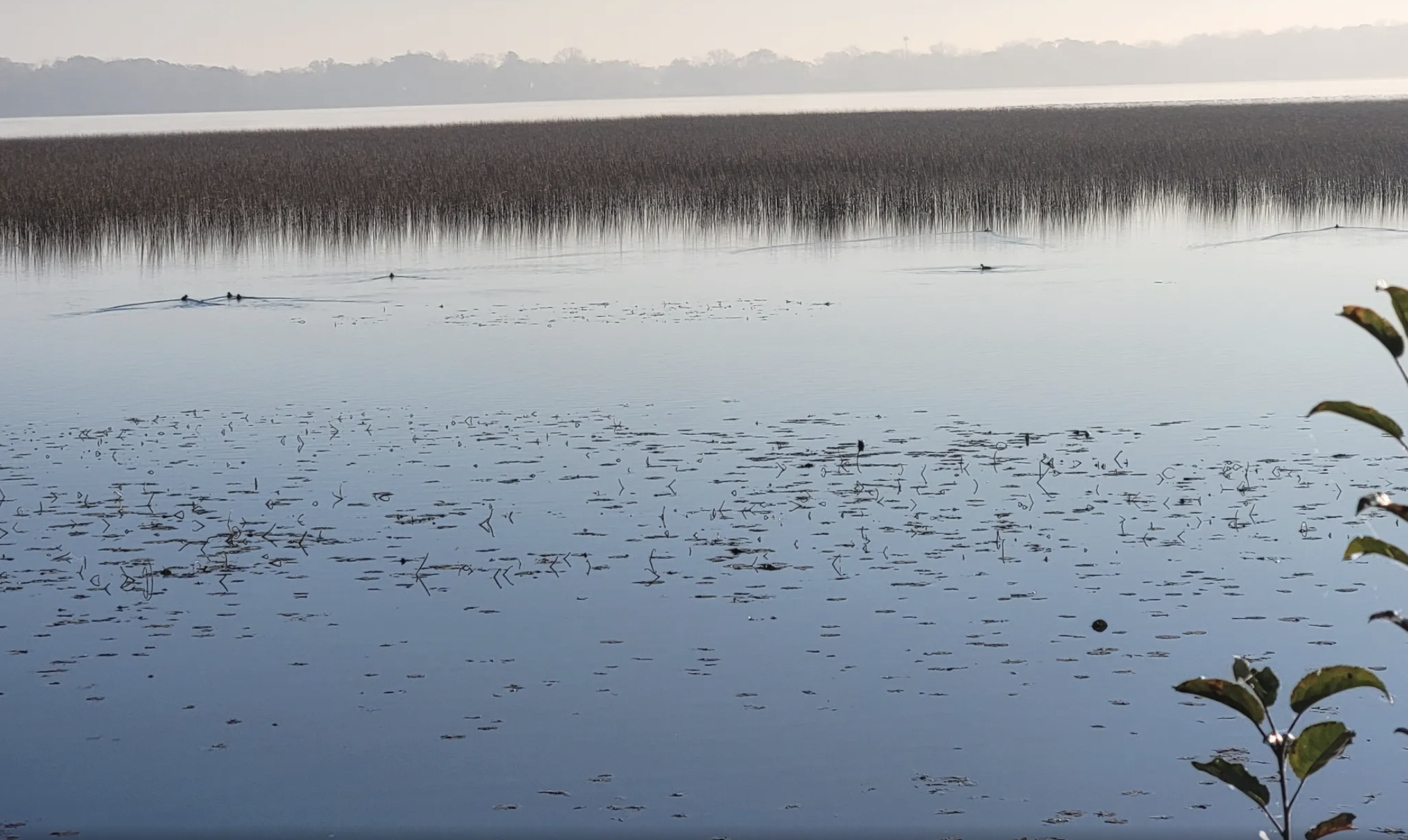
Photo by Shelly Ammon, courtesy of AllTrails
As one of the places in America archaeologists still can’t explain, Rock Lake’s formations have puzzled folks since they appeared to boaters during a low-water period in the summer of 1900. According to archives of the Wisconsin State Journal and the Milwaukee Journal, brothers Claude and Lee Wilson were out on the lake and spotted a series of cones made of stacked glacial cobbles. The “pyramids” have flat tops and long gradual ridges. Even before 1900, local Native people and settlers swapped stories about submerged stone structures along the south shore of Rock Lake.
What People Experience at Rock Lake
Most folks spot the Rock Lake Pyramids in April or May, just after ice out, or in the late fall, when cooler water temperatures have removed algal blooms and sediment from the lake. The best-known account of the pyramids came from Max Nohl, an aspiring diver, who tested a self-contained diving suit in Rock Lake in May of 1937. He measured one of the steep, flat-topped cones and reported that the structure was roughly 29 feet high and 38 feet across at its base. Nohl believed the piles looked too neat and symmetrical to be just a random pile of rocks.
The Leading Theories Behind the Rock Lake Pyramids
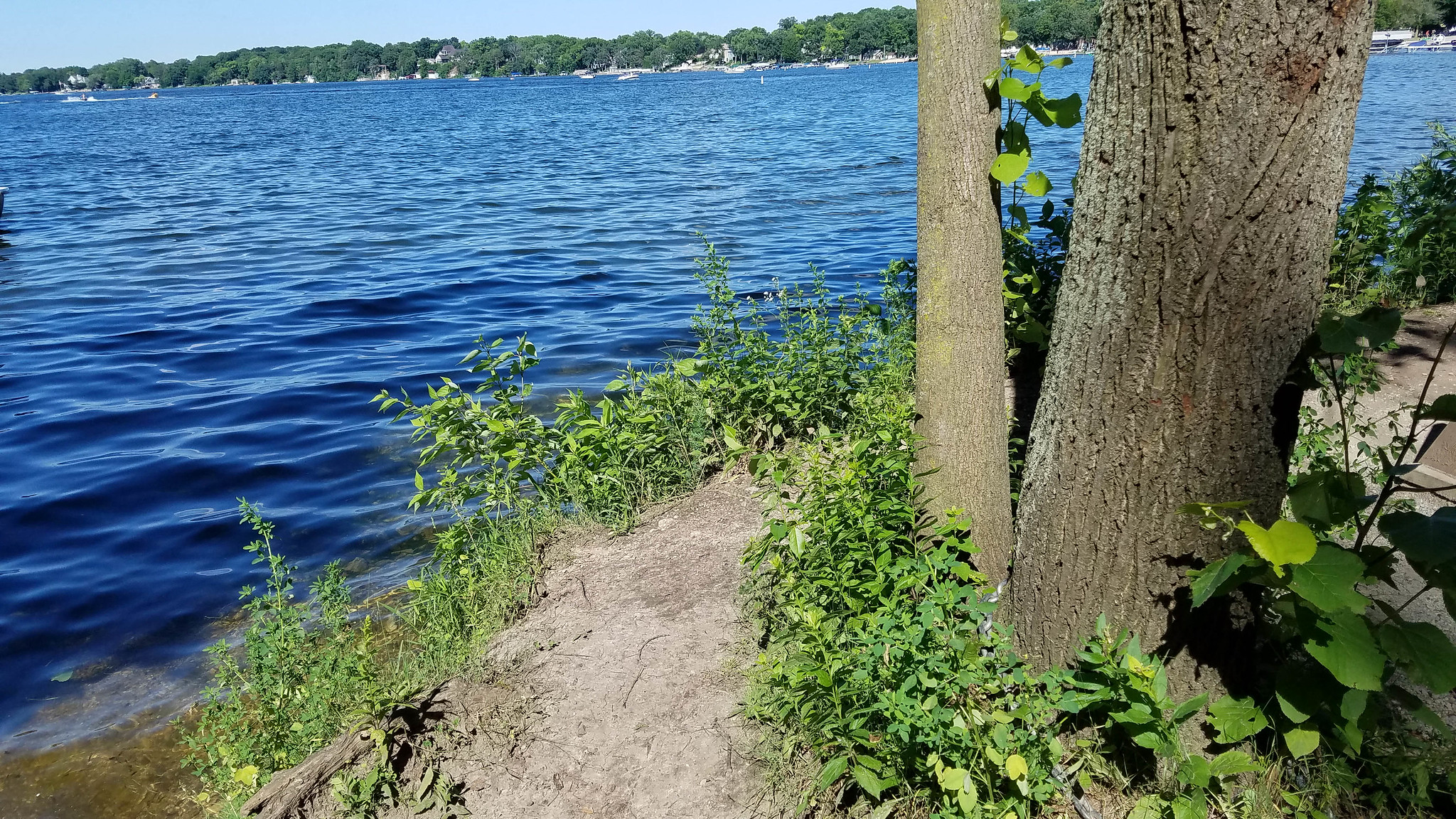
Photo by V’ron via Flickr Creative Commons
Geologists, scuba teams, and archaeologists from the Wisconsin Historical Society have examined sonar maps and dive footage from the lake and have come up with a few leading explanations for most of the cairns. The first potential culprit is glaciation, when the Green Bay lobe of the Wisconsin glacial event carved out Rock Lake’s basin more than 10,000 years ago and left behind kames, drumlins, and boulder piles across the county. The theory is that the Rock Lake pyramids are remnants from the glacier’s retreat. More modern potential culprits are 19th-century landowners and railroad crews, who hauled fieldstone onto the lake when it froze to build rock cribs and piers. The piles then formed when the ice melted, and the stones sank to the bottom. However, neither explanation accounts for the uniformity of the 10 distinct rock groupings. Finally, geological core samples show Rock Lake’s water level sat up to 30 feet lower during a dry period 5,000 to 7,000 years ago, leading some researchers to suggest that archaic Indigenous groups may have built stone petroforms or burial cairns on what was once dry shoreline.
Local lore, on the other hand, suggests that Ho Chunk elders told early Lake Mills settlers about ancient stone lodges that flooded when the spirits raised the lake’s water level. Some legends have also linked the cairns to Aztalan, a 12th-century Middle Mississippian settlement with flat-topped earthen mounds that’s just 3 miles east of Rock Lake on the Crawfish River, an archaeological anomaly that rivals some of the weirdest sights in America’s national parks. More recently, a local teacher, Gene Decker, and the Rock Lake Research Society ran a side-scan sonar over the pyramids that fueled theories about an ancient copper-mining civilization.
How To See the Rock Lake Pyramids for Yourself
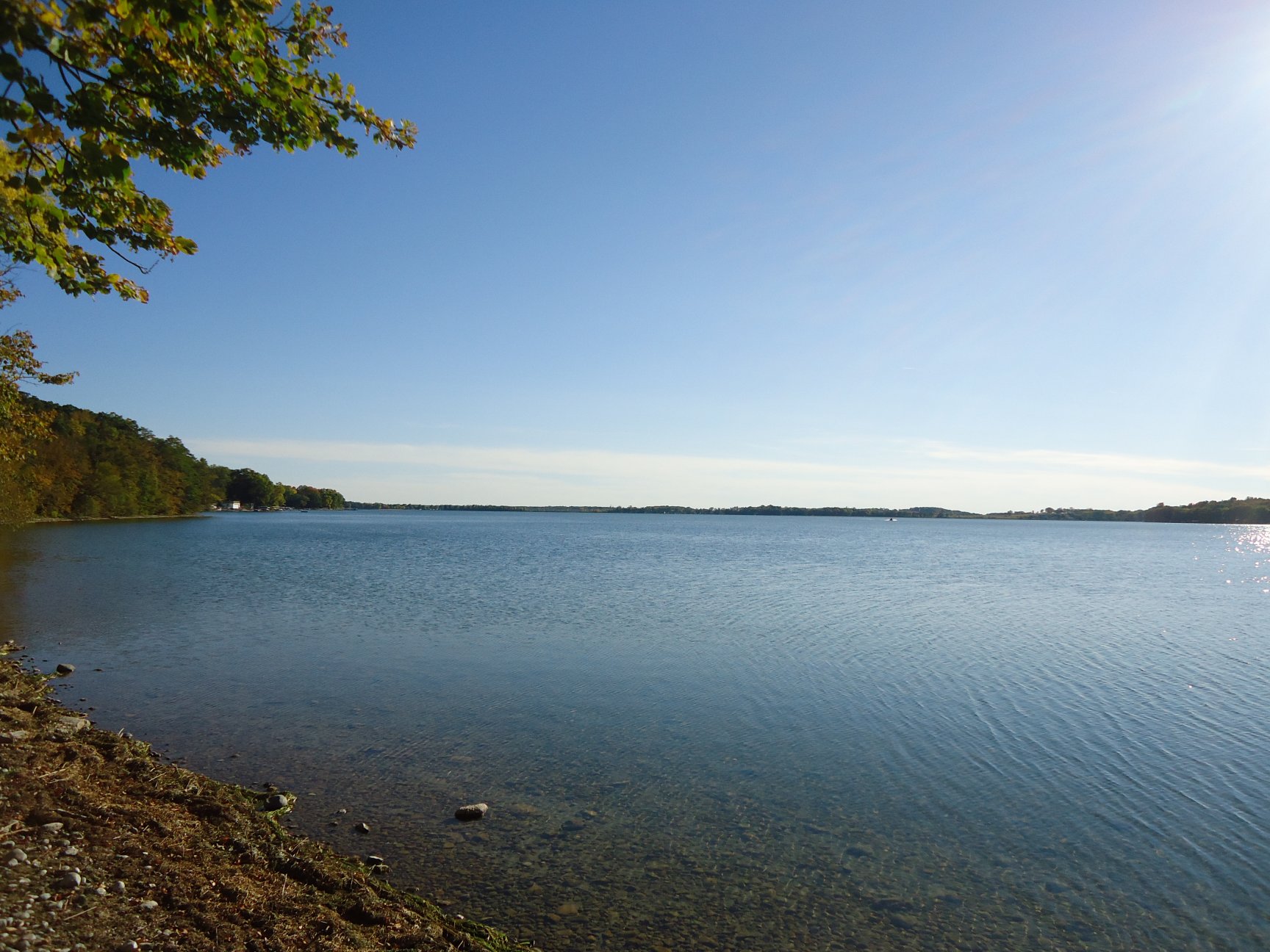
Photo by Archbob via Wikimedia Commons
You can explore the pyramids from the water by launching a boat from two nearby City of Lake Mills public parks: Sandy Beach Park on the south shore and Tyranena Park on the north shore. Go at midday, when the sun is high in the sky, and in spring or late fall when the water is at its clearest. Use a sonar depth finder or fish finder, if you can, to locate the cairns. If you wear polarized sunglasses, you may even spot some of the shallower piles from the shoreline. Visit the Lake Mills-Aztalan Historical Society museum in downtown Lake Mills to see sonar images and dive photos of the pyramids. Pairing a midday paddle on Rock Lake with a walk through Aztalan makes for an easy day trip to one of the most unique places to visit in Wisconsin.
FAQs About the Rock Lake PyramidsWhat causes the Rock Lake Pyramids?
No single cause of the Rock Lake Pyramids has been confirmed. Leading theories include natural glacial cobble deposits and 19th-century rock dumped on winter ice, evaluated by the Wisconsin Historical Society, alongside submerged Indigenous mounds. Locals also tell folklore about ancient builders, which has no scientific support. Researchers still can’t account for every deep-water structure.
Where can you see the Rock Lake Pyramids in Wisconsin?
The Rock Lake Pyramids are best explored from Sandy Beach Park or Tyranena Park on Rock Lake, located right in Lake Mills in Jefferson County. Both lakefront parks are open daily during daylight hours, and the City of Lake Mills maintains public boat launches and parking. Don’t trespass on private shoreline property nearby.
When is the best time to see the Rock Lake Pyramids?
Most sightings of the Rock Lake Pyramids happen between 10 a.m. and 2 p.m. on calm, sunny days in late April, May, and October. Cold water keeps algae down, improving visibility. There’s no guarantee on any given day, so bring a sonar depth finder and check the wind forecast before you go.
Are the Rock Lake Pyramids real?
The Rock Lake Pyramids have been reported since at least 1900, and researchers have mapped the underwater stone piles with side-scan sonar and scuba cameras since the 1980s. What’s debated is their origin, not whether the rock mounds exist. Most credible reports come from divers and boaters on clear spring days.
Source: Crime



0 Comments